
-
TEMPLATE: Decision to Terminate Checklist
$3.00Terminating an employee and by extension another’s livelihood and career requires careful consideration, checks and adherence to company policies as well as governing laws. This two-page resource allows all employ Policies Include: Termination Checklist Records of Attendance Performance and Disciplinary Action Reviewed All incidents accurately considered and documented Written Evidence exists that parties are aware of job needs and policies Other forms of Disciplinary Action have been considered Decision to Terminate is based on objective Standards This Termination of Employment is consistent with Previous Terminations All Relevant Parties have been Consulted I can justify the termination if the employee takes legal action Common Employee Questions *From Module 10 of HR Toolkit, purchase full Module here. -
Adaptability in the Workplace
$299.00One of the most important reasons for investing time to develop your adaptability is the fact that the world we live in, along with the working world, is constantly changing. This is due to different technological, economic, social, political and environmental events. When change is constant and unpredictable, people who are adaptable are not only better able to survive but also thrive. *Become a member to receive 20% off -
Technologie numérique
$399.00Bienvenue au cours Technologies numériques. Ce cours vous fournira les informations et les connaissances nécessaires pour accomplir des tâches professionnelles dans un environnement numérique. *Devenez membre pour recevoir 20% de reduction -
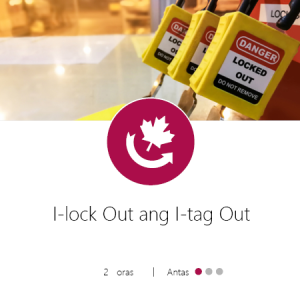
I-lock Out ang I-tag Out
$399.00Paglalarawan Ang kaligtasan ng manggagawa ay pinakamahalaga. Ang pagpoproseso ng pagkain ay kadalasang nasa pang-industriya na sukat na may automated na kagamitan at maraming potensyal na panganib. Ang pagiging kamalayan at sinanay upang harapin ang mga potensyal na panganib at mga sitwasyon sa lugar ng trabaho ay kritikal para sa kaligtasan ng empleyado. Ang kursong ito ay magbibigay sa mga manggagawa sa industriya ng pagpoproseso ng pagkain ng kaalaman sa mga kinakailangan sa kaligtasan na kinakailangan upang matiyak ang isang malusog at ligtas na kapaligiran sa trabaho. *Maging miyembro para makatanggap ng 20% diskwento* -
Les relations interpersonnelles pour la réussite en milieu de travail
$399.00Les compétences interpersonnelles sont l'un des piliers de l'intelligence émotionnelle et sont très recherchées par les employeurs. Si votre expertise et vos compétences techniques sont essentielles à votre réussite, vos compétences sociales pourraient bien être votre plus précieuse compétence. -
Lock Out Tag Out
$399.00This program is designed to introduce to the topic of Lock Out - Tag Out (LOTO), so you can better comprehend the occupational health and safety instructions given to you on the job as they relate to LOTO and its broader safety topic of energy isolation. -
TEMPLATE: Rejection Letter Template
$3.00Bad news is often difficult to impart. Finding the right words can be a challenge. The FPHRC's template will help you draft a letter to advise unsuccessful candidates that they were not selected for the position. Sections Include: Letter of Rejection Structure Suggested Wording Easily Adapted to your Corporate Branding *From Module 3 of HR Toolkit, purchase full Module here. -
Human Resources (HR) Toolkit – MODULE 8: Health and Safety
$199.00Workplace health and safety (H&S) is a must for all organizations. Employers must show due diligence by taking all the precautions that are reasonable to protect the well-being of employees. Employees must share in this responsibility by exhibiting a working knowledge of health and safety topics and by participating in efforts towards protecting themselves and anyone else around them. -
English as a Second Language: A Workplace Communications Primer
$125.00Good communications are vital to building good working relationships. This course is written for employees with intermediate competency in English as their second language. Exercises will explore the four main categories of communication: Speaking, Listening, Reading and Writing. It explores gaps in communication as the result of cultural language differences and provide exercises to help connect those gaps.